
Bridging the Ancient and the Modern The Evolution of Martial Arts into the MMA Arena
How Centuries of Tradition Found a New Home in the World of Mixed Martial Arts
The Roots of Tradition and the Birth of a New Era
The story of modern mixed martial arts is not simply about fighting. It is about the convergence of philosophies, techniques, and cultures that span centuries. Before the cage, before televised bouts, before pay-per-view fame, there was the dojo, a quiet place where discipline and respect were taught alongside combat technique. The dojo was not only a training ground but a space of personal transformation. Masters taught students to control both mind and body, to respect balance, and to see combat as a reflection of inner peace. These values laid the groundwork for what would eventually become the most dynamic combat sport on Earth.
As martial artists from various backgrounds began testing their skills against one another in the late twentieth century, the foundations of traditional training were challenged. What worked in kata or sparring did not always translate to full contact fighting against opponents trained in completely different styles. Yet, rather than fading into history, traditional martial arts adapted. The philosophies of karate, judo, kung fu, taekwondo, and aikido began merging with wrestling, boxing, and Brazilian jiu-jitsu to create a new hybrid language of combat. This transformation was not a rejection of tradition but a reimagining of it in a modern arena.
When the Dojo Met the Cage
The earliest days of organized mixed martial arts were a proving ground for every fighting system. When the first competitions took place, they were often marketed as battles to determine which martial art was truly the most effective. Judo practitioners faced boxers, karate black belts met wrestlers, and kung fu stylists tested their precision against grapplers. The results were often surprising, revealing both the strengths and limitations of each discipline. While some traditionalists resisted this evolution, others saw opportunity in the challenge. The dojo had found its new battlefield, one defined by versatility rather than purity.
Fighters quickly realized that no single art held all the answers. A karateka who could not defend against takedowns was at a disadvantage. A wrestler with no striking skill was equally vulnerable. This realization sparked a revolution in training philosophy. Fighters began to blend arts, keeping what worked and discarding what did not. The transition from dojo to octagon became symbolic of adaptation. The cage became the crucible where tradition was tested, refined, and reborn. What began as competition between arts evolved into a synthesis that redefined what it meant to be a martial artist in the modern age.
The Transformation of Technique
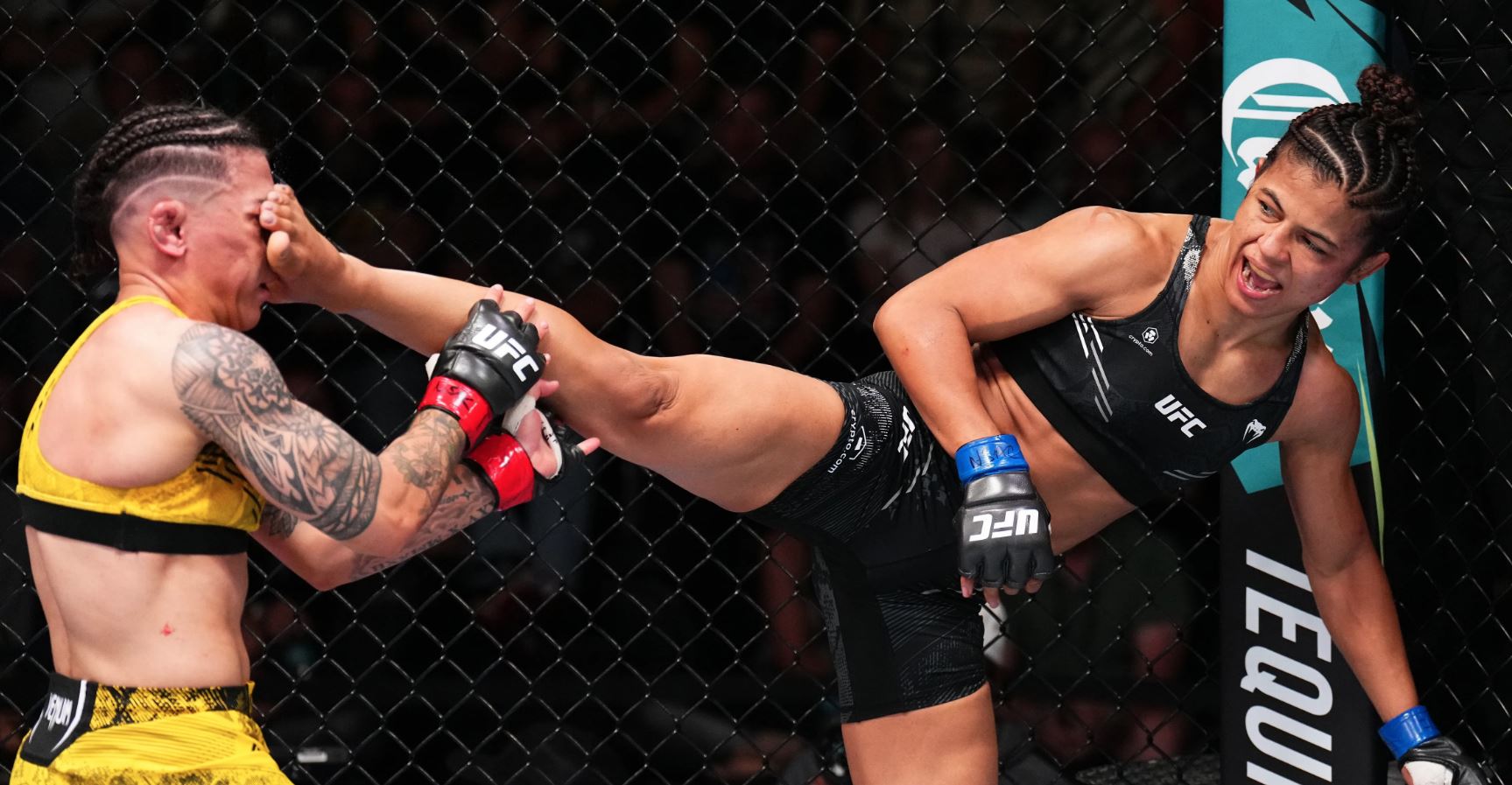
Traditional martial arts often emphasize form, rhythm, and aesthetic precision. Techniques are designed to teach body mechanics, timing, and control rather than raw power. In the context of mixed martial arts, these same principles gained new life when combined with real-world application. The crisp kicks of taekwondo became devastating tools when integrated with the footwork of boxing. The throws of judo found renewed purpose when blended with wrestling transitions. Even the controlled breathing of karate proved invaluable in managing fatigue and maintaining focus under pressure.
Adaptation required rethinking technique through the lens of practicality. Traditional stances were modified to allow faster mobility and defense against low kicks. Strikes were shortened for close-quarters combat, and grappling positions were expanded to fit the fluid nature of MMA exchanges. The beauty of traditional technique did not vanish. Instead, it became more efficient, stripped of excess movement and reshaped by the intensity of competition. The octagon forced evolution, and martial artists who once relied on form began to rely on adaptability, learning that true mastery meant constant transformation.
The Philosophy of Combat and the Spirit of Adaptation
While the techniques evolved, the philosophy behind martial arts endured. Traditional training teaches more than combat. It instills patience, humility, and respect, qualities that often separate the reckless fighter from the true martial artist. In modern MMA, these values continue to play a critical role. Fighters who approach combat with discipline and focus often find longevity in their careers. The mental conditioning taught in dojos, from meditation to visualization, translates directly into composure under fire. A calm mind can read the chaos of a fight better than one overwhelmed by adrenaline.
The philosophy of continuous improvement also carries forward. Martial artists from the past sought perfection through repetition and self-reflection. Modern fighters do the same, though their dojo is now a high-tech gym or a training camp filled with specialists. The pursuit of mastery remains unchanged. It is still about conquering the self before conquering the opponent. Even within the roaring crowds of a sold-out arena, the spirit of the dojo echoes quietly in every moment of focus, every controlled breath, and every act of respect shown between opponents.
Icons of Transition and the Modern Warrior
Several fighters throughout history have become living examples of this bridge between old and new. Early pioneers brought their traditional roots into the octagon, showing how ancient disciplines could survive and thrive in modern competition. Lyoto Machida used karate’s elusive movement to outmaneuver opponents in ways few had seen. Georges St-Pierre merged the precision of Kyokushin karate with wrestling and jiu-jitsu, creating a fluid and tactical style that defined an era. These athletes proved that the values and techniques of traditional arts could coexist with the demands of modern fighting.
Beyond individuals, the evolution has also influenced coaching and gym culture. Many MMA teams today incorporate traditional drills, bowing rituals, and respect-based codes of conduct into their training programs. This preservation of tradition within a sport that often appears chaotic is what gives MMA its depth. It is not simply a brawl, but a form of expression rooted in history. The best fighters understand that their skill is not only measured by victory but by the discipline they bring to every moment of training and competition.
Technology and the Modernization of the Dojo
The modern gym has become the new dojo, equipped with sensors, cameras, and data tracking systems that analyze movement with scientific precision. Fighters now use biomechanics to enhance striking efficiency and virtual simulations to prepare for opponents. Yet, beneath all this innovation, the same ancient principles persist. Balance, timing, and awareness still form the foundation of every effective technique. The difference lies in how these principles are taught and applied. Where the old dojo relied on repetition and intuition, the new one combines those methods with measurable feedback and evidence-based progression.
Technology has also made martial arts more accessible. Online instruction, global competitions, and digital communities connect practitioners across the world. A student in Japan can share techniques with a fighter in Brazil, blending ideas that once took generations to merge. The dojo has become global, its walls expanded beyond geography. This new level of connectivity mirrors the evolution of MMA itself, which thrives on shared knowledge and continuous innovation. The spirit of the dojo lives on, not confined to tradition, but expanded by it.
The Cultural Exchange and Respect Between Disciplines
One of the most profound outcomes of MMA’s rise is the cultural exchange it has fostered. Traditional martial arts carry with them not just techniques, but philosophies deeply rooted in their countries of origin. When a Brazilian jiu-jitsu black belt trains alongside a Muay Thai striker from Thailand or a judoka from Japan, they are engaging in a global dialogue of movement and meaning. The octagon has become a meeting ground where cultures intersect, and respect is the common language. Fighters bow, touch gloves, or embrace after the bout, recognizing that they share the same path of discipline and sacrifice.
This cultural blending has also reshaped how the world views martial arts. Once, traditional styles were seen as separate, even rival philosophies. Today, they are seen as interconnected threads in a larger tapestry of human combat evolution. The spirit of martial arts is no longer confined by style or region. It is defined by the pursuit of self-mastery and the courage to evolve. From the ancient temples of Shaolin to the brightly lit arenas of Las Vegas, the journey of martial arts continues, proving that tradition does not vanish in the face of change. It transforms.
The Endless Circle of Learning and Legacy
The evolution from dojo to octagon is not a story of replacement but renewal. Traditional martial arts continue to inspire modern fighters, not only in technique but in philosophy. The circle remains unbroken. Young athletes enter MMA gyms today and still bow before training, still learn the importance of humility and focus. The octagon may be louder than the dojo, but the silence of discipline remains within it. Every punch, kick, and takedown carries a trace of centuries-old wisdom reshaped for a new age.
The journey of martial arts is an ongoing dialogue between past and present. Each generation redefines what it means to be a warrior, balancing honor with progress, and tradition with innovation. The cage is simply the newest chapter in an ancient story, one that began with open hands and disciplined minds. As long as fighters continue to seek truth through combat, the essence of the dojo will live on, not as a memory, but as a living force guiding the evolution of every martial artist who steps into the octagon.